
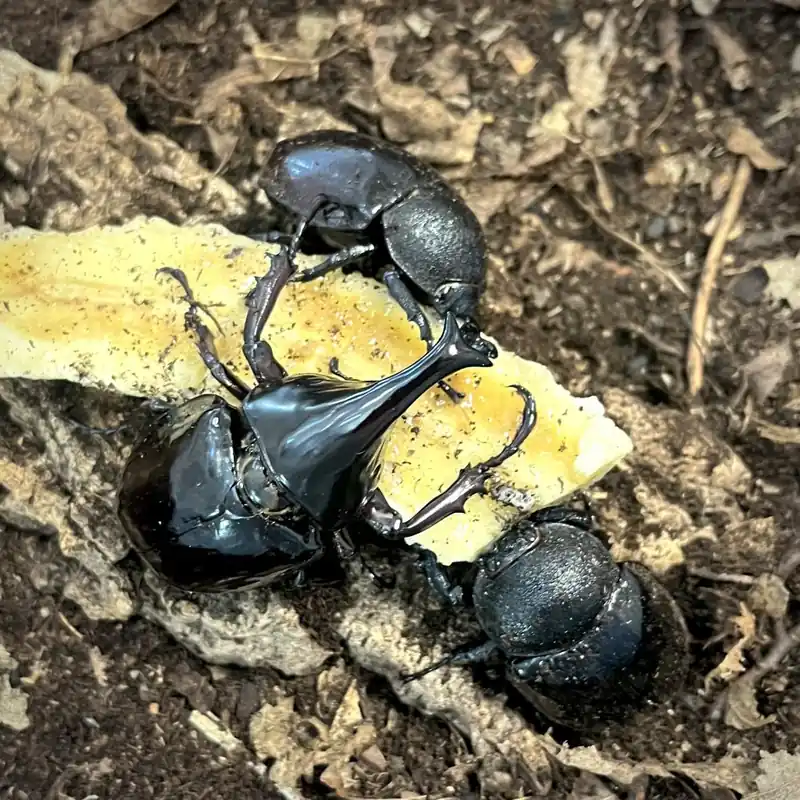
Xylotrupes gideon Sumatrensis – Vairant L1 Jen Po Omezenou Doba
Původní cena byla: 6,60 Kč.3,30 KčAktuální cena je: 3,30 Kč.
Doprava zdarma při objednávce nad 999,00 Kč
- Vaši objednávku doručíme rychle a nabízíme bezplatnou dopravu.
- 30denní možnost vrácení a refundace

Popis
Xylotrupes gideon sumatrensis
This beautiful representative of rhinoceros beetles from the island of Sumatra is extremely popular among keepers. Not only because of its attractive appearance but mainly due to its hardiness and low maintenance. They are very strong, active beetles, and their reaction to danger is guaranteed to entertain youif touched or disturbed, they rub their abdomen against their wing covers (elytra) to produce a loud sound resembling hissing or squeaking.
What do they look like? (Sexual Dimorphism) With this species, it is easy to tell a male from a female at first glance. The color of both sexes ranges from deep dark red and chestnut to glossy black.
- Male: Equipped with majestic, forked horns (one on the head and one on the thorax). In the wild, they use these horns to fight over females and the best feeding spots.
- Female: Slightly smaller, bulkier, and completely hornless. However, she is equipped with strong legs perfectly adapted for digging into the substrate to lay eggs.
Beetle Life Cycle Keeping beetles is about patience, as they spend most of their lives in the larval stage. However, the development of this species is relatively fast compared to other large beetles.
| Development Stage | Duration | What happens? |
|---|---|---|
| Egg | 34 weeks | The female lays them individually deep in the substrate. Tiny L1 larvae hatch from them. |
| Larva (L1L3) | 810 months | The most crucial stage! The larva only eats substrate and grows. It goes through three instars (L1, L2, and the largest, L3). |
| Pupa (Pupal Cell) | 1.52 months | The larva builds a hard oval „cell“ (cocoon) from substrate and saliva, where it transforms into a beetle. Do not disturb! |
| Adult Beetle | 24 months | The fully developed imago emerges, ready to mate and reproduce. |
Larval Care () How big and how large the horns of the adult male will be depends entirely on how well the larva was fed. An adult beetle does not grow at all.
- Substrate: Larvae need nothing more than quality food to live. They feed on decaying leaves and white rotten wood from deciduous trees (oak, beech). Using fermented substrate, known as Flake Soil, is absolutely ideal and will yield the largest beetles.
- Environment: Keep larvae in plastic boxes (with ventilation holes) at room temperature, 2225 °C. The substrate must be constantly moist but never wet like mud (if you squeeze it in your hand, water shouldn’t drip out).
- Communal Keeping: The larvae of this species are not aggressive and can be raised together in a large box (provided there is enough space and food).
Adult Beetle Care
- Enclosure: A plastic box or terrarium of about 4560 liters is sufficient for one pair or a small group (always only one male, otherwise they will fight!).
- Setup: Place at least a 20 cm layer of substrate at the bottom (for egg-laying). Provide plenty of thick branches and bark on the surface. Although beetles are strong, they are somewhat clumsyif they fall on their backs on a smooth surface, they cannot flip over without a grip point and will exhaust themselves needlessly.
- Temperature and Humidity: Normal room temperature and moderate humidity suit them well (lightly mist the enclosure regularly).
- Feeding Adults: Adult beetles love sweets. The best, cleanest, and most nutritious option is special Beetle jelly. You can also offer pieces of sweet fruit (e.g., overripe banana), but it ferments quickly and attracts fruit flies, so it must be changed frequently.
Související produkty
-
Sleva!

Rychlé Dodání Hikari Jumbo Carnistick 500g
Původní cena byla: 829,00 Kč.331,60 KčAktuální cena je: 331,60 Kč. Přidat do košíku -
Sleva!

Sleva Tropical Pro Defence s probiotiky M 3 l / 1,32 kg
Původní cena byla: 749,00 Kč.299,60 KčAktuální cena je: 299,60 Kč. Přidat do košíku -
Sleva!

Hikari Jumbo Carnistick 182g Oblíbený
Původní cena byla: 335,00 Kč.134,00 KčAktuální cena je: 134,00 Kč. Přidat do košíku -
Sleva!
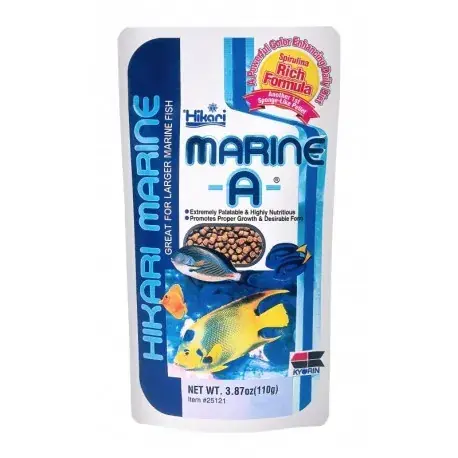
Hikari Marine-A 110 g Ověřený
Původní cena byla: 192,00 Kč.76,80 KčAktuální cena je: 76,80 Kč. Přidat do košíku